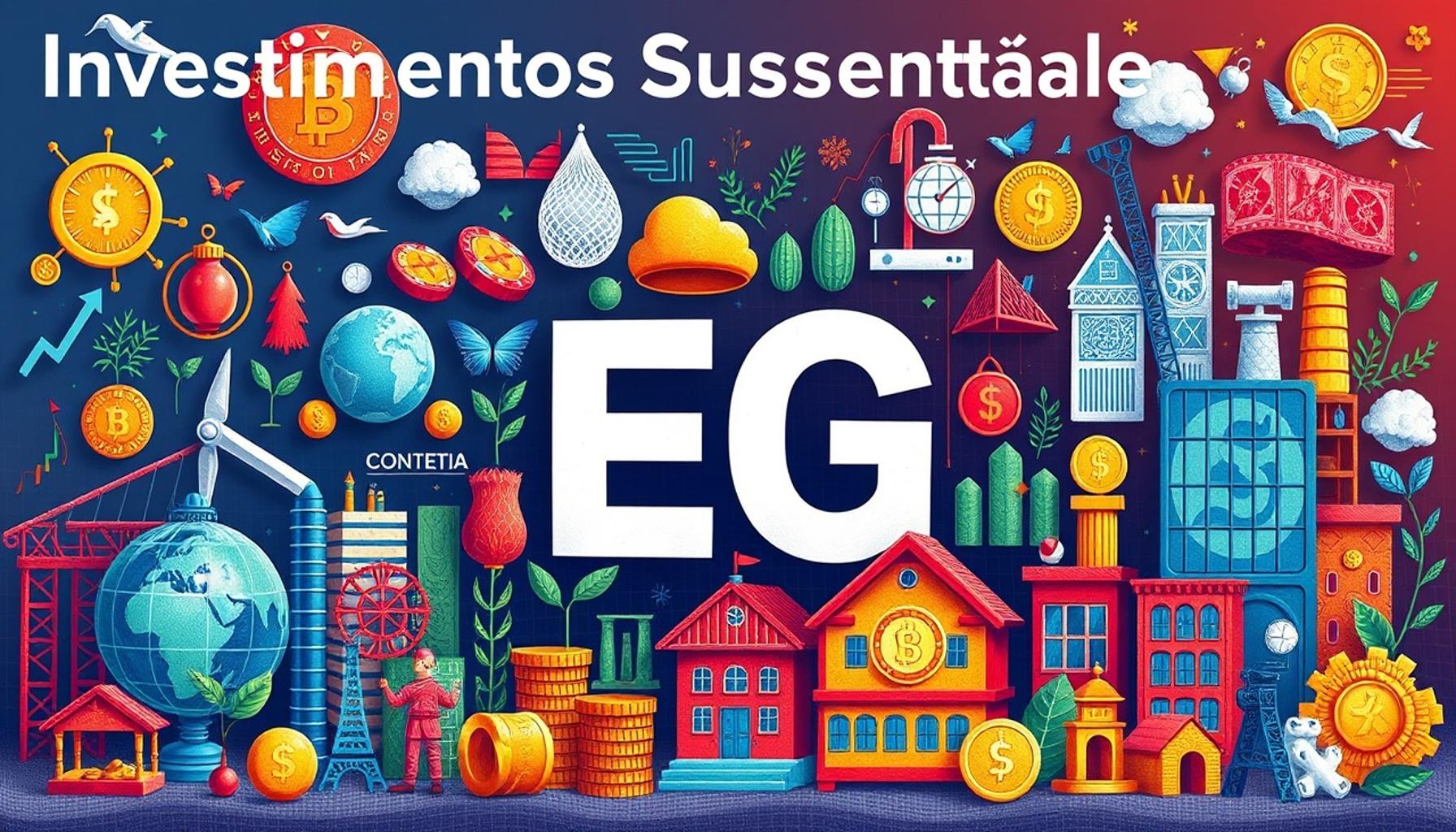
Sustainable Investment Strategies: Profitability and Social Responsibility

Understanding the Growing Trend of Sustainable Investments
In today’s changing economic landscape, individuals and institutions are taking a more holistic approach when it comes to investing. Sustainable investment strategies have emerged as a popular way for investors to put their money to work while also supporting their values. By focusing on investments that take into account not only financial returns but also social and environmental impacts, these strategies are attracting significant interest from a wide range of stakeholders.
The core principles of sustainable investing can be distilled into several key areas that resonate with conscious investors:
- Environmental impact: This facet emphasizes investing in companies dedicated to sustainability. For example, renewable energy companies like NextEra Energy are not only focusing on profits but also working to reduce carbon footprints and combat climate change.
- Social equity: Investors are more inclined to support businesses that stand for diversity and community welfare. Corporations such as Ben & Jerry’s have garnered attention for their activism around social justice, demonstrating how a company can thrive while making a positive societal impact.
- Governance practices: Ethical management and transparent corporate governance are essential elements in sustainable investing. Firms like Unilever, which actively engage in stakeholder communication and uphold high standards of corporate responsibility, are often preferred by sustainable investors.
The escalating demand for ESG (Environmental, Social, and Governance) investments in the United States is a significant indicator of this trend. A report from the US SIF Foundation disclosed that over $17 trillion is now allocated to ESG-focused portfolios, a figure that underscores the deepening commitment of investors to integrate purpose with profit.
Moreover, sustainable investments have shown promising financial performance. For instance, research from the Morgan Stanley Institute for Sustainable Investing revealed that sustainable equity funds outperformed their traditional counterparts during periods of market volatility. This finding highlights an important narrative: that one does not have to sacrifice returns to invest responsibly.
As we delve deeper into this multifaceted topic, we will explore various case studies and valuable insights into how integrating social responsibility into investment strategies not only benefits investors but also contributes to a more equitable society. This intersection of profit and purpose is not just a fleeting trend but a transformative movement that holds the potential to reshape the future of finance and society at large.
Exploring Key Aspects of Sustainable Investment Strategies
As the sustainable investment landscape continues to evolve, it is crucial to understand the core elements that drive this transformation. Investors are not simply looking for financial gains but are also seeking to align their portfolios with their values and societal goals. This combination of profitability and social responsibility defines the framework of modern investing and emphasizes that success is not evaluated solely by monetary returns.
To navigate this complex landscape, investors should consider several pivotal aspects that shape sustainable investment strategies:
- Green Investments: The emphasis on environmentally friendly projects is more pronounced than ever. From solar power companies to waste management firms, investments in sectors that prioritize the planet’s health are gaining traction. Studies indicate that businesses focused on sustainability not only contribute to reducing environmental harm but often yield significant long-term profitability. The Global Sustainable Investment Alliance reports that green investments have reached over $30 trillion globally, illustrating a remarkable shift in investor priorities.
- Community Development: Investments that foster community growth and support local economies have become a focal point for socially conscious investors. Financial technologies and community banks that prioritize inclusive practices are helping to bridge the financial gap for underrepresented groups. Companies like Patagonia exemplify how a commitment to community and environmental stewardship can cultivate brand loyalty and profitable business practices.
- Impact Investing: This strategy involves direct investments into organizations that aim to generate measurable social and environmental benefits alongside financial returns. The growth of impact investing has created new channels for investors to fund initiatives in sectors such as education, healthcare, and affordable housing. According to the Global Impact Investing Network, the impact investing market is projected to grow to over $1 trillion by 2025, showcasing the increasing recognition of its dual benefits.
A crucial component of sustainable investment strategies is the increasing incorporation of data-driven assessments regarding ESG performance. Many investors are now utilizing sophisticated tools to analyze a company’s commitment to environmental sustainability, social responsibility, and effective governance. The integration of such metrics allows investors to make informed decisions that support both their financial objectives and ethical considerations.
In recent years, the concept of “doing well by doing good” has gained momentum, as numerous studies demonstrate the correlation between sustainable practices and enhanced financial performance. A report by the Harvard Business School revealed that companies prioritizing sustainability enjoyed a competitive advantage, showcasing a compelling case for the convergence of profit and purpose.
Moving forward, as the dialogue around sustainability continues to grow, it is essential for investors to remain informed and proactive. The dynamic space of sustainable investment strategies offers not only an avenue for generating wealth but also a pathway to drive positive change across industries and communities. As we dissect more trends, challenges, and prospects in sustainable investing, the benefits of melding profit with purpose will become even clearer.
| Advantage | Details |
|---|---|
| Strong Market Demand | Global consumer preferences are shifting toward environmentally and socially responsible products, enhancing the viability of sustainable investments. |
| Long-term Profitability | Companies that prioritize sustainability have been shown to outperform competitors financially, as they are often more resilient to market fluctuations. |
| Tax Incentives | Sustainable investments may qualify for government tax breaks or credits, adding an additional layer of financial benefit for investors and promoting responsible practices. |
| Enhanced Corporate Reputation | Investing in sustainable and socially responsible companies can significantly enhance a brand’s image, attracting customers who prioritize ethical consumption. |
The discussion around sustainable investment strategies goes beyond profitability; it nurtures a deep-rooted commitment to societal good. For example, companies that embrace environmentally sustainable practices not only attract ethically-minded investors but frequently exhibit superior risk management, contributing to long-term stability and growth. The intersection of social responsibility and profitability proves to be a potent catalyst for attracting diverse investor profiles. As awareness surrounding issues like climate change and social inequity rises, sustainable investment strategies offer a unique opportunity to align financial goals with the planet’s well-being and community development.
The Financial Performance of Sustainable Investments
As the market becomes increasingly attuned to the principles of sustainability, the financial performance of sustainable investments has garnered significant attention. Investors are looking beyond traditional metrics and recognizing that responsible practices can fuel long-term growth and provide resilience against market volatility. This indicates a paradigm shift, where aligning personal values with investment goals is becoming a strategic priority.
Recent analyses indicate that companies prioritizing sustainable practices often outperform their peers during challenging economic climates. A study by Morgan Stanley found that sustainable equity funds outperformed traditional funds by an average of 4.3% annually over a five-year period. Additionally, firms with strong environmental, social, and governance (ESG) credentials display lower stock price volatility, presenting a compelling case for the integration of sustainability into investment portfolios.
Regulatory Trends and Momentum
The regulatory landscape is rapidly evolving in favor of sustainable investment. Initiatives such as the EU Sustainable Finance Disclosure Regulation are setting benchmarks that promote transparency and accountability for sustainability performance. In the United States, asset managers are beginning to feel the pressure as institutional investors demand environmentally and socially responsible investment products. This regulatory momentum is likely to reshape the competitive landscape, encouraging a broader shift toward sustainable investment strategies within traditional financial institutions.
Innovative Financial Products
The rise of innovative financial instruments has further propelled the popularity of sustainable investing. For instance, green bonds and sustainability-linked bonds have emerged as powerful tools that allow investors to directly fund projects aimed at addressing climate change and promoting social upliftment. According to the Climate Bonds Initiative, the green bond market is projected to reach $1 trillion by 2023, signifying a robust demand for investments that contribute positively to society.
Moreover, technology-driven platforms are facilitating access to sustainable investment opportunities. Crowdfunding platforms and robo-advisors now offer tailored portfolios that align with individual investors’ sustainability criteria. This democratization of sustainable investing enables more people to participate in the movement and highlights the increasing importance of financial inclusivity.
The Challenges Ahead
Despite the growth and enthusiasm surrounding sustainable investment strategies, challenges remain. A prevalent concern is the lack of standardized metrics for measuring sustainability, which can create confusion among investors. As ESG ratings can differ significantly between agencies, there is an urgent need for greater transparency and consistency to help investors make informed decisions.
Furthermore, the potential for greenwashing poses risks to the credibility of sustainable investing. With companies often touting their commitments to sustainability without substantive action, investors must conduct thorough due diligence to identify genuine sustainable practices. As scrutiny increases, the evolution of effective reporting frameworks will play a crucial role in ensuring authenticity in sustainable investments.
In summary, as the landscape of sustainable investing continues to mature, the intersection of profitability and social responsibility will drive both market trends and investor decisions. The increasing awareness, innovative financial products, and regulatory support paint a promising picture for the future of sustainable investment strategies in the United States and beyond.
Conclusion
The evolution of sustainable investment strategies marks a significant shift in the way investors approach their financial portfolios. By intertwining profitability with social responsibility, stakeholders are realizing that investments guided by ethical practices can yield impressive returns while also contributing to the greater good. The evidence is compelling; with sustainable funds consistently outperforming traditional counterparts, investors are becoming increasingly confident in the financial viability of their socially responsible choices.
As regulatory landscapes grow more favorable, and innovative financial products like green bonds take center stage, the accessibility of sustainable investing continues to expand. Technology plays a pivotal role in this transformation, opening doors for a more inclusive investor base keen on making a tangible impact. However, challenges such as the lack of standardized metrics and the threat of greenwashing still loom large, demanding vigilance and due diligence from investors.
Ultimately, the future of sustainable investment is bright, fueled by a combination of consumer demand for transparency and the recognition that responsible business practices can drive resilience and growth. As we look ahead, the alignment of investment strategies with positive societal and environmental outcomes is not merely a trend; it is rapidly becoming a fundamental principle of financial success. For any investor aspiring to make a difference while pursuing profits, now is the time to embrace sustainable investment strategies that reflect both personal values and financial goals.